
Forbidden Flare Pants Won’t Keep Their Shape? Here’s the Fix
Few wardrobe frustrations match pulling on your favorite flare pants only to find the knees bagging, the hem dragging, or the waistband stretched beyond recognition. Shape loss is the silent killer of otherwise perfectly good pants — and it’s almost always preventable.
We designed Forbidden Flare Pants to hold their structure through dozens of wears, but even the best fabric blends need proper care. This guide walks through why flare pants lose shape in the first place, how to diagnose which kind of distortion you’re dealing with, and the exact steps to restore and maintain the fit you bought them for.

Why Flare Pants Stretch Out Faster Than Other Cuts
The flare silhouette puts physics to work against fabric stability. Unlike straight-leg or skinny cuts that rely on consistent tension from hip to ankle, flares distribute weight unevenly — the upper leg fits snug while the lower leg hangs loose and swings with every step.
That constant movement below the knee generates friction and micro-pulls that gradually loosen the weave. Cotton-blend fabrics, especially those with less than 2% elastane, are particularly vulnerable because they lack the recovery memory that snaps fibers back into place after stretching.
The waistband faces its own battle. Most people wear pants slightly below the natural waist, which means the band spends all day fighting gravity and the tension from sitting, bending, and moving. Over time, elastic threads fatigue and the woven shell around them gives way.
Diagnosing Your Specific Shape Problem
Not all distortion looks the same, and fixing it starts with identifying where the fabric failed. Lay your pants flat on a hard surface and compare them to a newer pair or a garment with the correct measurements.
Knee Bagging
If the fabric billows outward at the knees when the pants are flat, you’re seeing the classic result of repeated bending. This happens when the outer layer of fabric stretches faster than the inner layer, creating a permanent bubble. It’s most common in pants washed in hot water or tumble-dried on high heat, which relaxes the weave.
Hem Dragging
Flares that now brush the ground instead of hovering just above your shoe were likely dried while damp and stretched under their own weight. Gravity pulled the wet fabric downward, and once the fibers dried in that elongated state, the new length became semi-permanent.
Waistband Gaping
A waistband that stands away from your body when fastened has lost its elastic rebound. This can stem from over-washing, exposure to high heat, or simply age — elastic thread degrades faster than woven cotton and typically shows fatigue first.
The Restoration Process: Heat, Steam, and Strategic Drying
Most minor shape loss reverses with controlled heat application. The same molecular forces that allowed the fabric to stretch will contract it again if you reintroduce tension and warmth in the right sequence.
Start by washing the pants inside-out in cold water with a mild detergent. Skip fabric softener entirely — it coats fibers and prevents them from gripping each other during the contraction phase. Once the wash cycle finishes, remove the pants immediately and lay them flat on a towel.
While they’re still damp, gently pull the fabric back into its original shape. For knee bags, smooth the excess material toward the inseam and outseam. For elongated hems, fold the leg at the correct length and pin it in place. Let the pants air-dry flat for 30 minutes, then move them to a hanger and allow them to finish drying vertically.
If air-drying alone doesn’t tighten the fabric enough, use a steam iron on medium heat. Hold the iron 1-2 inches above the problem area and let the steam penetrate the weave for 10-15 seconds. The heat will activate the fabric’s memory and encourage fibers to return to their pre-stretched positions. For stubborn waistband stretch, loop the band around a cylindrical object slightly smaller than your waist measurement and steam it while it’s under tension.

Preventive Care: How to Stop Shape Loss Before It Starts
Once you’ve restored your pants, the goal shifts to preventing the problem from recurring. The single most effective change you can make is switching to cold-water washing and line-drying exclusively.
Hot water and machine heat are the primary culprits behind premature fabric fatigue. Heat breaks down elastane fibers, weakens cotton weaves, and accelerates dye fade — none of which you want. Cold water cleans just as effectively for everyday soil and preserves the structural integrity of blended fabrics.
When you do wash, turn the pants inside-out to reduce friction against the drum and other garments. Use a gentle cycle if your machine offers one, and never overload the washer. Crowded loads create excessive tangling and pulling, which stresses seams and distorts fabric.
After washing, reshape the pants while damp and hang them by the waistband on a sturdy hanger with clips. Let gravity work in your favor — the weight of the damp fabric will encourage vertical alignment rather than horizontal sagging. If you’re short on drying space, lay them flat on a drying rack rather than draping them over a single bar, which creates a crease and concentrates weight in one spot.
For those considering multiple pairs in your rotation, the Forbidden Flare Pants vs Forbidden Pajama Pants: Which Style Fits Your Lifestyle? guide covers how alternating between cuts can extend the lifespan of each pair by reducing wear frequency.
When Fabric Fatigue Is Permanent
Some damage can’t be reversed. If the waistband elastic has fully separated from the woven shell, if seams have pulled apart at stress points, or if the fabric has thinned to the point of translucency, restoration techniques won’t help.
Inspect the inner waistband for visible gaps between the elastic strip and the surrounding fabric. If you can slide a finger between the two layers, the bond has failed and the pants will continue gaping no matter how carefully you wash them. Similarly, check high-friction areas like the inner thigh and the back of the knees for pilling or threadbare patches — these indicate the weave has broken down at a fiber level.
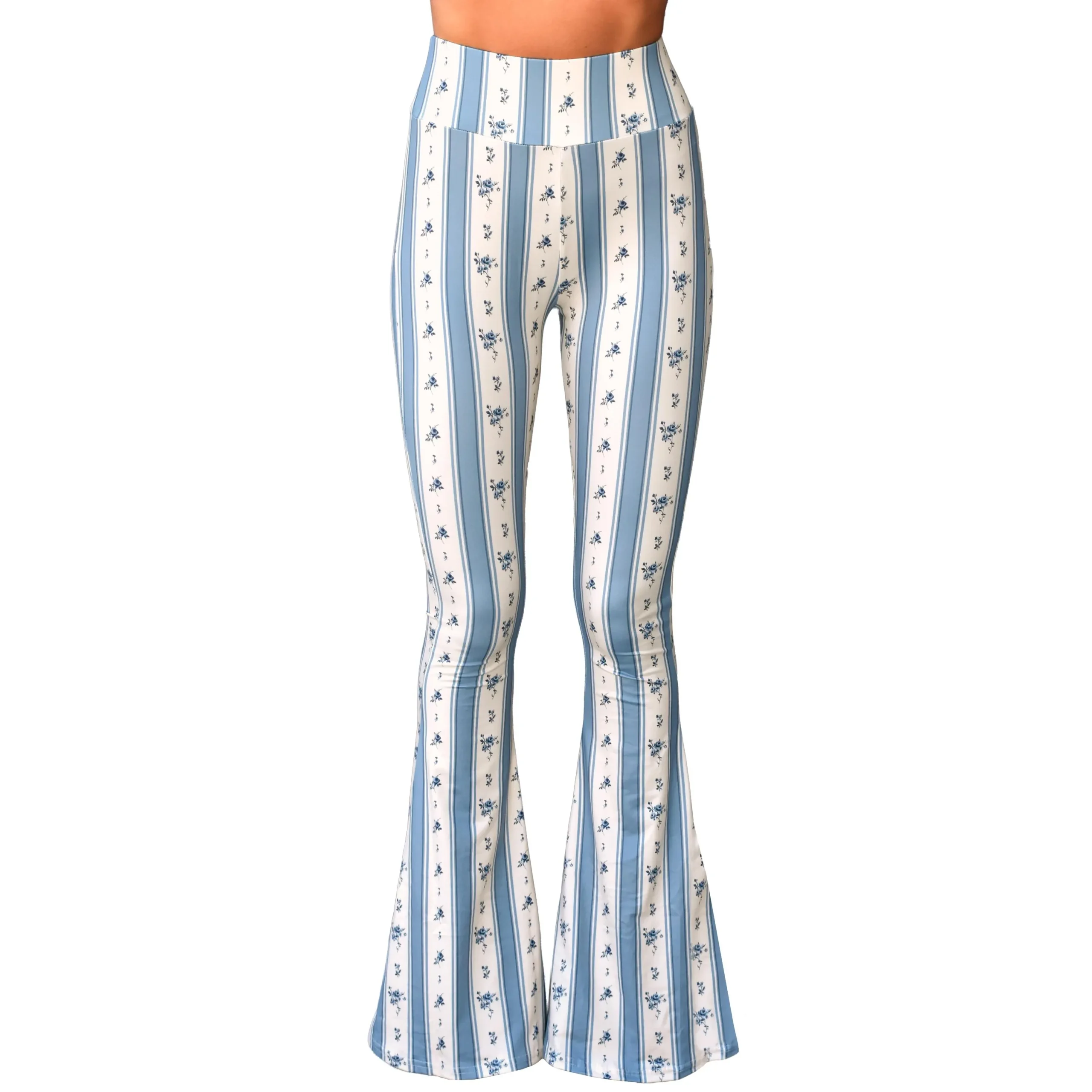
In these cases, the most practical solution is replacement. Our Forbidden Flare Pants – Black are built with a 98% cotton, 2% elastane blend that balances structure with just enough stretch recovery to resist bagging, and the reinforced waistband holds its shape through repeated wear cycles better than fashion-grade alternatives.
Keeping Your Flares Looking New
Shape loss in flare pants isn’t inevitable — it’s the result of heat, friction, and improper storage compounding over time. The fix is straightforward: cold water, air-drying, and strategic steaming will reverse most distortion, while preventive habits like turning pants inside-out and hanging them properly will stop the problem from returning.
The fabric blend you start with matters too. Our flares use a cotton-elastane weave engineered to snap back after stretching, and the reinforced waistband resists the kind of fatigue that leaves cheaper pants gaping after a few wears. Treat them right, and they’ll hold their shape through years of regular use.
Common Questions About Flare Pants Fit and Fabric Care
Low heat is better than high, but even gentle tumble-drying accelerates shape loss over time. The mechanical tumbling itself — not just the heat — creates friction and pulls the fabric in random directions, which contributes to bagging and stretching.
For best results, skip the dryer entirely and hang-dry your pants. If you must use a dryer, remove the pants while they’re still slightly damp and finish drying them on a hanger to minimize the time they spend tumbling.
Care labels provide general guidance, but they don’t account for wear patterns unique to flares. The swinging motion below the knee and the constant tension at the waist create stress points that generic washing instructions don’t address.
Even if you wash on cold and air-dry, sitting for long periods, wearing the pants too tight, or storing them folded instead of hung can all contribute to gradual distortion. Fabric care is only half the equation — how you wear and store the pants matters just as much.
Hold the pants up to natural light and look for areas where the weave has thinned or separated. If you can see individual threads pulling apart or if the fabric looks shiny and worn, the fibers have degraded beyond repair.
Another test: pull the waistband taut and release it. If it snaps back immediately, the elastic still has life. If it stays stretched or returns slowly, the elastic has fatigued and won’t recover with washing or steaming.
Absolutely. Pure cotton flares stretch faster than cotton-elastane blends because cotton lacks elastic recovery — once the fibers pull apart, they don’t snap back. A small percentage of elastane, typically 2-5%, gives the fabric memory so it can return to its original shape after stretching.
Polyester blends resist bagging better than cotton but tend to pill and lose their smooth finish faster. Denim flares hold shape longer than lightweight twill or chino fabrics, but they also take longer to dry and are harder to steam back into form if distortion does occur.
Ironing alone won’t prevent shape loss, but it can reinforce fabric structure if done correctly. Use a steam iron on medium heat and press along the grain of the fabric, never across it, to avoid distorting the weave.
Ironing is most effective as a finishing step after washing and air-drying. It smooths wrinkles and tightens the surface weave, which can give the pants a crisper appearance and slightly firmer feel. However, it won’t compensate for poor washing habits or worn-out elastic.
Wash only when visibly dirty or after 3-5 wears, whichever comes first. Over-washing is one of the fastest ways to degrade fabric, especially if you use hot water or a dryer.
Between washes, air out your pants by hanging them in a well-ventilated area overnight. If they pick up a minor stain, spot-clean with a damp cloth and mild soap rather than throwing the entire garment in the wash. This reduces the number of wash cycles and extends the fabric’s lifespan significantly.